
2026-07-02
Electrification of farm machinery is emerging but requirements for renewable energy to power it are high and how to provide it needs further thought
By Jonathan Hippisley, Greens (WA) Climate Crisis Working Group
Introduction
The biggest barrier to the electrification of agriculture is the enormous amount of energy required to run agricultural machinery. The technology required is still under development. Battery powered tractors and harvesters would carry some weight overhead and there would be higher upfront costs. Fast charging equipment would be required, as well as an efficient system of energy delivery. And rather than investing for the future in improvements to the electricity transmission infrastructure, the WA state government is busy dismantling it1.
Tractors
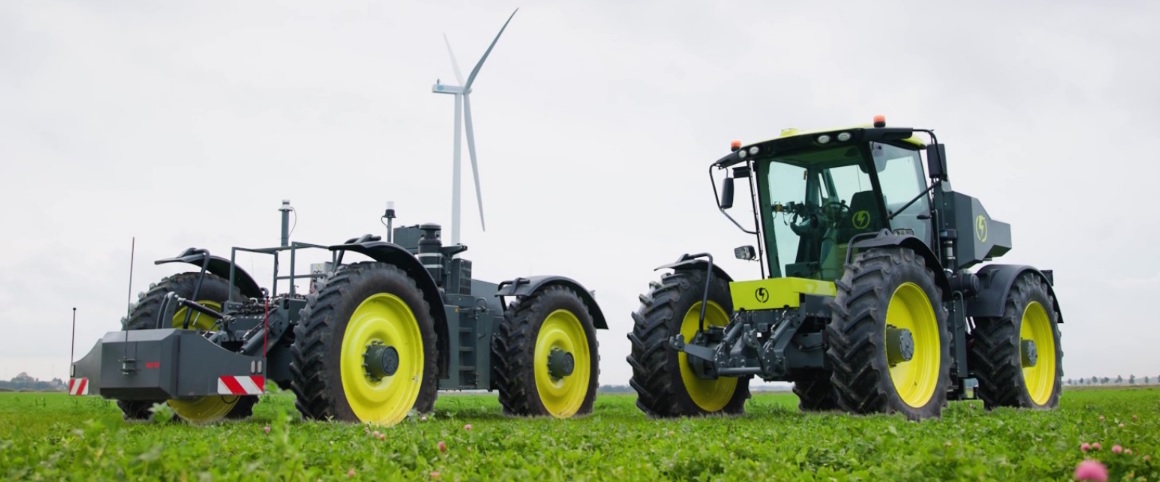
Of the tractors shown above, the John Deere 100kW E-Power2 is a prototype while the EOX Frontier 129 kW 150kWh Electric Tractor3 is in production and is scheduled to go on sale in Australia this year. The maximum power output is 129kW and it comes with a 150 kWh battery. AC and DC charging options are available. Using a 10 amp AC charger it would take 60 hours to charge. Using a 300 kW DC charger it would take half an hour to charge. Western Power’s Standalone Power Systems (SPS) come with 20kW of solar power1. If all of this could be funnelled into the EOX Frontier, it would take 7.5 hours to charge (but nothing would be left over for the farmhouse).
High energy tasks
In talking to local farmers in the Wheatbelt, one was using a 60 foot seeder with a 500 hp diesel tractor and felt that the battery electric models currently available would not be up to the task. Another suggested that two battery electric tractors working a seeder width in the order of 6 metres could replace a diesel tractor working with a wider seeder. Seeding was the main focus of our conversations, because at the time of writing that was the season we were in, but one farmer mentioned that harvesters, or “headers”, have power needs in the order of 500 horsepower and work similar hours to seeders during the harvest.
Farmers do not seem generally opposed to Western Powers plans to remove 23,000 km of poles and wires from the grid1, because they all volunteer for the local fire brigade and a major cause of fires in the summer is pole top fires. Those that are wedded to diesel seem happy to accept the 20kW systems1 being offered to power the farmhouse. Those who like the idea of electrification believe that larger arrays of panels will serve their needs.
For some back of an envelope calculation on what might be needed, I’ll use the Merredin Solar Farm (MSF)5 because the stats are well published. The MSF has over 354,000 panels producing up to 100MW on an area of 460ha. That is a max output of 217kW/ha. The annual output of the MSF is 281GWh, which is 770 MWh/day, 1.67 MWh/ha per day or 0.167 kWh per square metre per day.
Key parameters for the calculation are:
- The power output of the tractors used,
- The number of tractors used;
- The hours per day the tractors are working.
For the first two I’ll use 2 EOX tractors working at 129 kW. The farmer researching these tractors reported working a 10 hour day, but others work 18, 21 and even 24 hours during the seeding and harvesting seasons. I’ll use 24 hours, because I think my assumptions on the first two parameters are quite conservative. If a 500hp electric tractor existed, it would use 375kW.
Two tractors running at 129kW for 24 hours will use 6.192 MWh a day, which is 0.8% of the average daily output of the MSF. That would require in the order of 2850 MSF panels over an area of 3.7 ha. And while it is quite possible that the farmer might have this much marginal or unproductive land to spare, it is worth pausing to consider the problems of managing this much electrical power.
The open circuit voltage of a single solar panel is usually around 45V and the max current is around 5A. So if you wired 2850 panels together in series you’d be up around 128 kV and if you wired them all in parallel you’d be dealing with 14,250 A. These are grid scale numbers.
Charging swappable batteries while the tractor is in use would require the charging rate to match the power of the tractors. Twice 129kW is 258kW, which is beyond the range of most of the CCS2 DC chargers currently in operation in WA. One shudders to think what they cost, but even if this money could be recouped over time by the farmer, many of the chargers in place were installed by Synergy, the south west WA electricity retailer, presumably working closely with Western Power. So regardless of whether the benefits of retaining poles and wires are outweighed by the risks, Western Power should be talking to farmers, ascertaining their long term needs, and recruiting or assisting the farmers in recruiting the staff they need to install the infrastructure required by a future electric farm.
An additional consideration is that the sun only shines powerfully for around 6 hours a day, so around 75% of your energy needs must be stored in a battery. An isolated farm running 2 129kW tractors for 24 hours a day will need, in addition to the swappable tractor batteries, a storage battery sufficient to store 75% of the 6.192 MWh daily energy consumption. That is around 4644 kWh. If the tractors run for shorter hours a smaller battery would be needed, and the tractors run mostly during the day, that again would reduce the required battery size.
Electrification of agriculture in China
While the government of Western Australia is busy tearing down its rural electricity transmission infrastructure1, the Chinese are set to invest USD 722 billion into theirs over the next five years6. They are doing this to take mains electricity further into remote areas, to facilitate the harvesting of renewable energy and to take the nation towards its 2030 carbon peak goal.
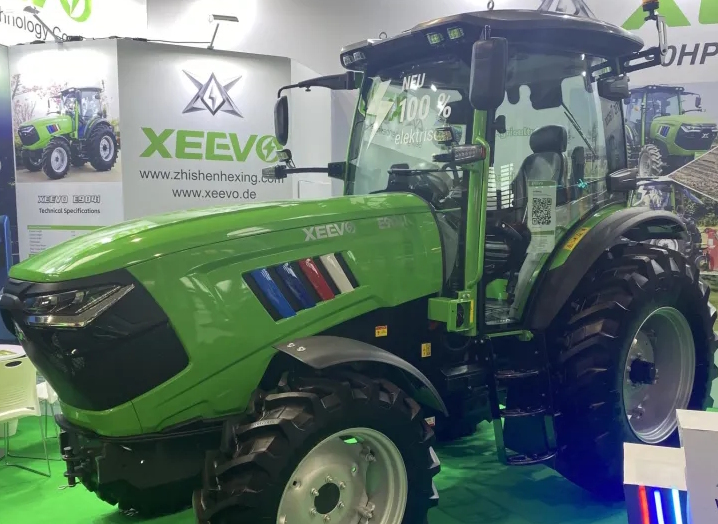
The electrification of heavy agricultural machinery seems to be at a similar level to Europe, with the “in production” Xeevo E904i offering only 66kW and a 103 kWh battery. But a recent Reddit post8 reported that China has deployed 300k agricultural drones for tasks such as crop spraying. So where they hit a short term technical barrier, the Chinese innovate in a different direction to use the technology they have. A 52V 29Ah drone battery stores only 1.5 kWh, which is a about hundred times smaller than a tractor battery. Whether it would be practical to use these on a West Australian arable farm is another question.
At the other end of the spectrum, the Chinese have spent 15 years developing electric trucks12. In 2024 electric trucks accounted for 10% of all Chinese heavy-duty truck sales13. Electric trucks may not immediately seem like agricultural vehicles, but during the harvest, fleets of HGVs are used to transport grain to handling silos, and in towns where the railways have been closed, from the silos to port.
BYD, whose electric car sales have recently overtaken those of Tesla, is one of two companies which dominate the electric truck market. BYD is an integrated business. It produces batteries, the EVs that use them and charging stations to charge them. Its latest innovation is megawatt charging via its proprietary 1000V architecture 14.
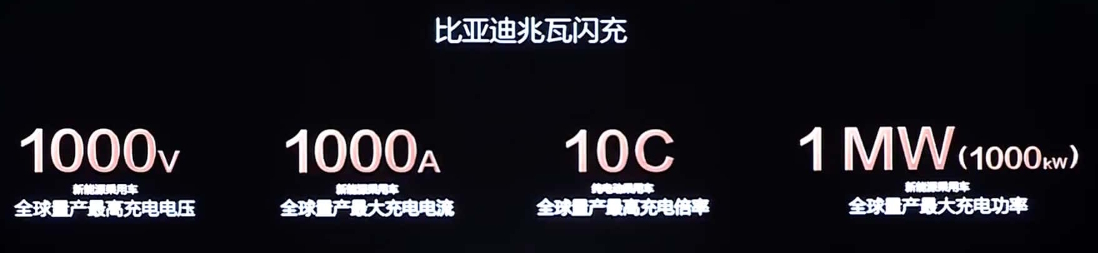
The materials and electrical equipment used in the vehicle have been modified to handle 1kV. Lithium Iron Phosphate (LFP) batteries were redesigned from the ground up, with modified electrolytes, separators and electrodes to reduce internal resistance and enable 10C charging rates. The C here refers to the capacity of the battery, and 10C means the ability to charge to or discharge from full capacity 10 times in an hour.
For comparison, my three-year-old house battery has recommended charge/discharge rates of 0.5 C, but I rarely go above 0.2 C, because I have all day. The idea behind the megawatt charging system is that a car can be replenished with energy in five minutes, which compares with the time it takes to fill a petrol tank, and a truck can be replenished in the time required for the driver’s statutory rest breaks.
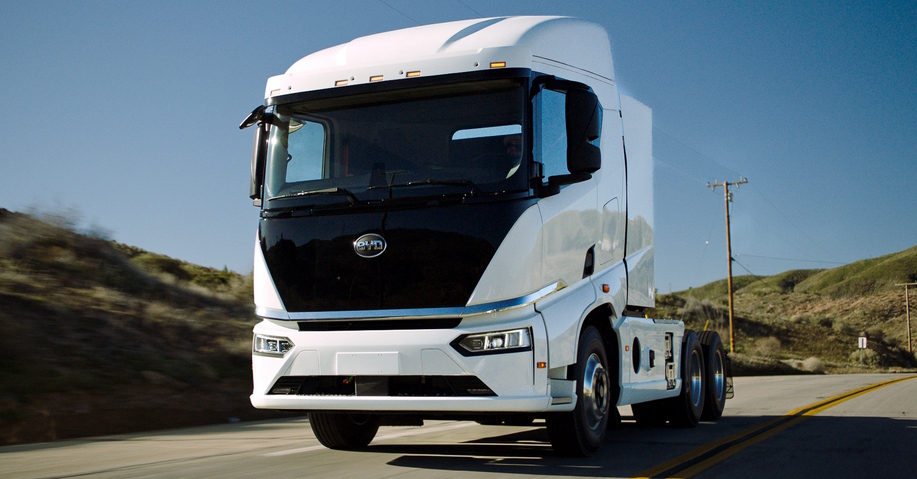
The BYD 8TT battery electric truck uses adapted Super e-Platform technology to deliver 483 HP and a maximum torque of 664 foot pounds (900N.m)15. These specs would suit a high powered tractor, but BYD don’t include tractors in their product line. The market for cars and trucks is many times larger than that for tractors, which tend to be made by companies which specialise in agricultural machinery.
Conclusion
The technology required for high powered battery electric tractors and harvesters is being developed and even deployed in cars and trucks, although not yet in agricultural machinery. Australia no longer engages in much industrial production, but we have a large agricultural sector, and the forward thinking participants in that sector envisage an electrical future.
The West Australian government needs to support this endeavour. Poles and wires carry risks, but before ripping them all out, they need to pause for thought and consider the farmers’ long term electrical needs, rather than simply installing paltry 20kW systems for the farm house and walking away.
Sources
- ABC (URL: https://www.abc.net.au/news/2022-10-02/thousands-of-renewable-standalon…)
- Future Farming (URL: https://www.futurefarming.com/tech-in-focus/john-deere-unveils-electric…)
- EOX Tractors (URL: https://www.eoxtractors.com/en/)
- Canon Creek (URL: https://www.cannoncreek.com/guide-to-electic-tractors)
- Risen (https://risenenergy.com.au/portfolio/merredin-solar-farm/)
- China Daily (URL: https://global.chinadaily.com.cn/a/202602/10/WS698a8ea3a310d6866eb3869a…)
- Profi (URL: https://www.profi.co.uk/news/made-in-china-90hp-electric-tractor/)
- Reddit (URL: https://www.reddit.com/r/AgriTech/comments/1rqliyv/china_deploys_over_3…)
- Global Agriculture (URL: https://www.global-agriculture.com/global-agriculture/chinas-agricultur…)
- TopXGun (URL: https://www.topxgunag.com/topxgun-fp700-agriculture-drone)
- Drone Spray Pro (URL: https://dronespraypro.com/blogs/news/ultimate-guide-to-agricultural-dro…)
- Rest of World (URL: https://restofworld.org/2025/china-electric-freight-trucks/)
- Inside EVs (URL: https://insideevs.com/news/760077/catl-surge-electric-trucks-china/)
- Inside EVs (URL: https://insideevs.com/news/758625/byd-megawatt-charging-demo-china/)
- Hudson County Motors (URL: https://www.hudsoncountymotors.com/product/byd-8tt-8tt-er/)
- The Guardian (URL: https://www.theguardian.com/australia-news/article/2024/jul/01/farms-sw…)
- Scania (URL: https://www.scania.com/group/en/home/electrification/e-mobility-hub/meg…)
Header photo: John Deere 100kW E-Power prototype
[Opinions expressed are those of the author and not official policy of Greens WA]