
2026-03-09
Australian Indigenous knowledge is termed Jukurrpa in the Western Desert, with each language community, dwelling in a particular ‘Country’, having its own named version of Jukurrpa. My focus is on education of non-Indigenous Australians about non-secret, non-sacred aspects of Jukurrpa-like systems, to facilitate using Indigenous Ecological Knowledge.
By Andrew Turk, a member of the Green Issue editorial team
1. Introduction
I have conducted transdisciplinary research regarding Indigenous landscape language ontologies (ethnophysiography). Such studies relate to the meaning of Jukurrpa-like systems, as a combination of spirituality, philosophy, law and lore. This research has lasted for more than thirty years (Turk, 2020; 2021; 2024; Turk and Mackaness, 1995) (see section 2). Now I am developing as detailed, comprehensive and valid as possible representation of the complexity of Jukurrpa. Such investigations facilitate education about Jukurrpa and its relationships to modes of dwelling in Country and Indigenous Ecological Knowledge (IEK). This includes the role of metaphor in traditional representation of Jukurrpa (e.g. via ‘dreaming tracks’ of ‘ancestral beings’). Traditionally, Australian Aboriginal people did not have a formal system of writing, hence, for communication and teaching, they relied on oral language, pictorial symbols, artwork, song, dance and ceremonies.
The objective is not to define a ‘generic’ version of Jukurrpa to integrate the hundreds of different versions, but to better understand reasons for variations between the versions adopted by specific language communities and how this relates to well-targeted Natural Resource Management (NRM). Because Australian First Nations people’s relationships with Country are holistic, it is critical to understand the local version of Jukurrpa before seeking to use IEK. Phenomenology (Edmund Husserl; Martin Heidegger; Maurice Merleau-Ponty; etc.), with concepts like ‘lifeworld’, ‘dwelling’, ‘topology’ and ‘communal intentionality’, is the most useful philosophy for explaining aspects of Jukurrpa (Turk, 2021).
2. Collaborations and Publications
This section summarises more than thirty years (1993-2025) of research and community development projects and consultancies with Indigenous people carried out by Andrew Turk with many collaborators. All projects involved highly ethical working together with Indigenous individuals and relevant organisations. Most projects were carried out with other non-indigenous researchers and also with some Indigenous researchers or community representatives and in collaboration with PhD students. The following summary indicates the long and diverse history of interaction before this author considered it appropriate to comment on topics like Jukurrpa:
Native Title Related Projects:
- Assistance with development of the National Native Title Tribunal: information system requirements and GIS development (1993 to 1995) (Turk & Mackaness, 1995).
- Helping with Native Title claims - e.g. Aboriginal Legal Service and the Ngarluma / Yindjibarndi claim, with Kathryn Trees (1990s).
- Digital cartographic representations of Aboriginal boundaries, peoples’ connections to country and sacred places (1990s and 2000s).
Aboriginal Community Development:
- Developing remediation methods for digital divide issues and grant-based funding (1990s)
- Role of Mineng Noongar (SW WA) in land management of Kalgan River catchment and protection of sacred/historical sites (late 1990s and 2000s).
- Establishment of Roebourne Telecentre/Community Resource Centre and development of multimedia GIS, linked to genealogy databases (1990s and 2000).
- Development of Ngurra Wangkamagayi cultural awareness training group in Roebourne ‒ to provide courses and on-country trips for mining company personnel, police, teachers, etc. (1990s) and presentation with Martu elders of similar courses for KJ (2000s). Assistance with development of Indigenous businesses, including the Pilbara Indigenous Nursery Ngarluma/Yindjibarndi (1990s and 2009-11) and Georgia Bore Artists’ Camp development project with Martu. Final Report 2014.
- Representation and protection of rock art at Murujuga (Burrup Peninsula) (1990s).
- Collaborative investigation of protocols and technology for sending messages to remote communities, via TV - Ngaanyatjarra Lands (2000s).
- Evaluation study of Goolarri radio and TV advertisements re alcohol awareness (2014/15).
Ethnophysiography (landscape language) case studies:
- Yindjibarndi language (Pilbara) with David Mark and David Stea; Manyjilyjarra (NW WA) with KJ and Clair Hill (Hill and Turk, 2017); and Navajo (Dine) SW USA, with David Mark, David Stea, Carmilita Topoah and Niclas Burenhult (1990s to 2020).
Education Projects:
- Pilot education curriculum for Perth secondary students about Wadjak Noongar history, culture and issues. Final report (229 pages) to WA Dept. of Education (Turk, 2015).
- Development, implementation and evaluation of a Martu community education program regarding a possible Cameco uranium mine at Kintyre. The educational Video produced was given a Cameco award (2010-12) (Turk and Hilliard, 2012).
- Investigation of various versions of Jukurrpa for different language groups and methods of summarising and teaching to non-Indigenous people about non-secret, non-sacred aspects of these complex systems (2010s and 2020s).
This very diverse set of projects in collaboration with Aboriginal communities and organisations resulted in sixty-seven publications specifically relating to Indigenous cultures, many conference presentations (local, national and international) in several disciplines and multiple feedback sessions with cultural organisations and to Indigenous communities. There was always a strong emphasis on maintaining the highest level of ethics in all activities. Four publications were specifically focused on this topic and many others discussed it, in the context of methodologies. The researchers were not paid by Aboriginal communities or organisations, except low-level costs paid by KJ when Andrew was involved in presenting their cultural awareness courses. Always there was great care to receive proper permissions for use of information, full acknowledgement of all assistance and no ‘appropriation’ of any information.
3. What is Jukurrpa
Jukurrpa, often very poorly translated by anthropologists as ‘The Dreaming’ or ‘Dreamtime’, is a deeply spiritual and complex conceptual system, central to the hundreds of Australian Aboriginal cultures (language groups) all across the continent. It has four main features:
a. Creation of Country: Jukurrpa refers to the time when ancestral beings created the world that we live in today. These beings shaped the land and established laws and customs which provide a complex system for managing individual behaviour and communal life.
b. Spiritual and Moral Framework: Jukurrpa constitutes a living system of knowledge that guides behaviour, relationships, ethics, rights and responsibilities, especially regarding kinship, caring for Country, spiritual and other ceremonies, and all social conduct.
c. Timelessness: Jukurrpa is for all time, the past, present and future. Hence, it is continually relevant, but also always evolving to suit contemporary circumstances.
d. Connection to Country: Every topographical feature of the landscape (hills, pools, rivers, etc.) in the language group’s Country is linked to Jukurrpa stories to form a web of relationships. These stories are passed down through generations.
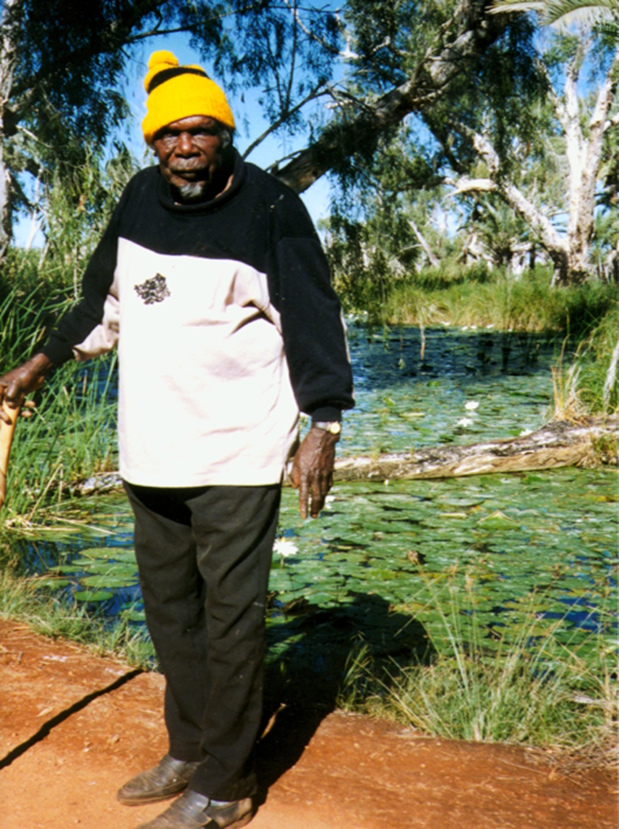
As a non-initiated, non-Indigenous Australian, I claim no authority to say what Jukurrpa is, or is not. However, I regard it as a mission to assist other non-Indigenous Australians to understand Jukurrpa more completely and to respect people who abide by its precepts. My understanding results from discussion of non-secret, non-sacred aspects of Jukurrpa with hundreds of Australian Indigenous people and by reviewing contributions on this topic from many Indigenous and non-Indigenous authors. I take my licence to speak about these matters from my conversations with Yindjibarndi elder Woodley King in the mid 1990s. Before telling me non-secret and non-sacred aspects of their version of Jukurrpa, he made me solemnly promise to pass-on this information: “tell as many whitefellas as possible, because they are very ignorant” (Woodley King, 1995). This article is part of my honouring that promise. I am happy to defer to any Indigenous scholar who believes that their alternative explanation of Jukurrpa is more effective than mine.
Each version of a holistic Jukurrpa-like system of concepts is similar to, but different from, each other version, for different language groups. This is because each version comes out of, and is fundamentally structured by, its association with the specific area of Country (landscape), which a particular Indigenous language group defines as their own dwelling place. The location and topography of this particular area of Country determined their mode of dwelling. For instance, fishing on the coast or an island, or hunting and seed collection in the desert, continually moving between quickly exhausted water sources. These sustainable Jukurrpa-like systems have enabled Aboriginal communities to dwell for tens of thousands of years in all parts of the continent, including in extremely harsh environments. Their occupation of place gives them First Nations custodial rights and responsibilities over their Country, which have never been ceded to colonists.
The relationship between Jukurrpa and Country is central to Aboriginal life. Full understanding of such relationships is part of traditional continuous teaching about Jukurrpa to Aboriginal children and adults and the contemporary need to continue that traditional (internal) teaching in the new multi-cultural and environmental circumstances. My objective is to explain, as best I can, the complex power of Jukurrpa, while honouring the constraint of not seeking, knowing or discussing any secret or sacred aspects. So, contributions to training processes by First Nations people are necessary, and collaboration with Aboriginal researchers and writers is highly recommended.
I want to assist non-Indigenous Australians to appreciate the amazing exercise of human intelligence involved in developing Jukurrpa and transmitting its meaning to countless generations of Indigenous Australians, in hundreds of areas of Country, over tens of thousands of years. This has provided a unique contribution to the World’s oldest continuous culture. An appropriate understanding of Jukurrpa should lead to increased respect and a determination that First Nations Peoples continue to occupy a very special place in Australian society. Most Aboriginal people are keen to share appropriate aspects of their deep knowledge.
In the 1990s, Frank Rijavec (1995) carried out media productions with Yindjibarndi people (and Ngulama and other language groups) in Ieramugadu (Roebourne) WA. The First Nations structure of living is depicted in the Exile and The Kingdom film (Rijavec, Harrison and Soloman, 1995). The version of Jukurrpa for Yindjibarndi people is called Bidarra Law, within Ngurra Nyujunggamu. Rijavec (2010, p. 93) describes their form of Jukurrpa as “an infinitely rich, veiled, subtly mutable, mercurial, carnival, intimate skein of elements and influences that derive from, and speak of, the Yindjibarndi conception of creation, their Country and the life within it, including living landforms and water, and which embodies and gives carriage to the relationships between the people, creatures, spirits and things that share existence in the creation”.
Nicholls (2014) quotes Warlpiri teacher Jeannie Herbert Nungarrayi (in 2002), who explained Warlpiri Jukurrpa as follows:
“To get an insight into us – [the Warlpiri people of the Tanami Desert] – it is necessary to understand something about our major religious belief, the Jukurrpa. The Jukurrpa is an all-embracing concept that provides rules for living, a moral code, as well as rules for interacting with the natural environment. The philosophy behind it is holistic – the Jukurrpa provides for a total, integrated way of life. It is important to understand that, for Warlpiri and other Aboriginal people living in remote Aboriginal settlements, The Dreaming isn’t something that has been consigned to the past but is a lived daily reality. We, the Warlpiri people, believe in the Jukurrpa to this day.”
4. Application of Indigenous Ecological Knowledge to Sustainable Dwelling on Country
There is a rapidly growing literature regarding the value of adopting Indigenous Ecological Knowledge (IEK). This can be defined as: “the holistic, place-based understanding of ecosystems, including relationships between living beings and the environment, developed and passed down through generations by Indigenous peoples. It encompasses sustainable practices, spiritual beliefs, and oral traditions, and is a vital knowledge system for managing natural resources and adapting to environmental changes, with significant overlap and complementarities with Western science” [1]. Hence, in the case of First Nations Australians, IEK is intimately linked to Jukurrpa-like systems.
Understanding Jukurrpa, Country and IEK requires respect for Australia’s First Nations peoples, who have never ceded their custodial rights and responsibilities over Country. Hence, the need for ‘truth-telling’ about history (Makarrata) as part of a necessary process for producing appropriate treaties for Indigenous language communities. Understanding of the environmental damage to Australian landscape, since the start of British colonisation in 1788, is part of the treaty process. This probably requires that some details of IEK form a part of those discussions and documents.
Whether IEK is used in any specific circumstance, and manner, depends on its applicability to addressing a particular environmental problem or opportunity. It also depends on whether those with the powers (and funding) appropriate to problem resolution believe in the effectiveness, efficiency, feasibility, and sustainability of such Indigenous knowledge. In Australia, major problems requiring management via IEK are usually the responsibility of governments. Hence, legal frameworks need to be developed and passed into law before effective use of IEK is possible.
Legislative developments in several Australian States (including WA) have recently included procedures for co-management of natural resources by government and the appropriate Indigenous language group(s). The Victorian Government in September 2025 started developing legislation to facilitate Truth Telling (Makarrata), Treaty and collaboration in a variety of areas of State policy. For such developments in the use of IEK to be successful, it is important for non-Indigenous participants to develop a sound understanding of the Jukurrpa-like system applying to each specific area chosen for discussion or NRM operations. This is because a holistic approach is imperative, which fully understands cultural, linguistic and spiritual concerns and potentialities, to maximise effective and equitable involvement of First Nations people in land management processes. Sustainable living in harmony with the land is a crucial aspect of traditional Indigenous culture. This is celebrated today by the very successful ‘caring for country’ (male and female) ranger teams in many remote Australian communities. For instance, the Central Land Council supports fifteen groups, including the Anangu, Akityarre, Kaltukatjara Rangers, North Tanami, Tjakura and Warlpiri ranger teams.
Discussing a study with an Indigenous language community (in the Northern Territory), Walsh, Dobson and Douglas (2013) explain the critical importance of proper NRM practices, in the context of IEK, including how Jukurrpa links this knowledge with the worldview of Arrernte rights and responsibilities for specific parts of their landscape. In this research IEK is specifically linked to Anpernirrentye, their form of Jukurrpa, incorporating relationships between people, plants, laws and all things.
5. Education About Jukurrpa, Country and IEK
Julie Singleton (2024) discusses the role of ‘place-based’ learning, especially where it is carried out in a particularly relevant part of the landscape. She asserts that this is a ‘whole of body’ experience:
“placed-based educational approaches that use local environments as the learning context could not only provide needed educational reforms but also sow the seeds of sustainable behaviours of future generations. Furthermore, natural environments are offered as an optimal context for the emotional and sensory-rich needs of learning experiences that transform eco-paradigms and develop land ethics … (this) requires integrative approaches – head, hand and heart. (p. 1)”
The use of personal narratives is also championed by Singleton (2024, p.1) as a means of transforming eco-paradigms via discussion which provides effective learning experiences: “(The) rich context of a natural place enhances the aesthetic quality of a learning experience … Emotions are stirred through relational experience, which can generate love (of place)” (p. 1). Singleton cites David Sobel’s (2005) Place-based Education, which describes a variety of community-based school projects that demonstrate how eco-literacy can be encouraged via authentic learning processes.
Traditionally, Western science has concentrated on trying to understand cognitive approaches to environments, rather than those associated with affects (emotions). Sutton (2024) emphasised an approach to cognition that involves the whole body and that is intrinsically integrated with affect. He discusses: “the current state of work on situated affect and distributed memory … I then deploy these frameworks to examine some affective dimensions of place memory, sketching a strongly distributed conception of places as sometimes partly constituting the processes and activities of feeling and remembering” (p. 593).
John Bradley (2012) provides a very useful discussion of Jukurrpa within the context of teaching about Aboriginal knowledge systems to Monash University students. This involved intense discussion of vignettes about Aboriginal lifeworld, knowledge and activities (including land management), analysed in detail by each student in their reflective journal entry for each vignette. He maintained this enabled “transfer (of) knowledge about the presumed Other into our own cultural space without reducing, fragmenting, and exoticizing complex knowledge systems” (p. 26).
Jennifer Eadie and Stephen Muecke (2025) discuss how Australian Aboriginal walking tracks can be used as a very effective way of teaching about culture. They used a case study with the Goolarabooloo people, the traditional custodians of the coastal land north of Broome, WA. This investigation examined use of local guides to lead journeys through Country, via following traditional tracks between sacred sites. This is a way of sharing their Country respectfully and educating non-Indigenous visitors, in a very ‘grounded’ way. Such journeys through country may mimic traditional dwelling tasks, like searching for bush honey. This involves sensory and aesthetic experiences, which emerge collectively via experiencing Country together and discussing its significance to Aboriginal people.
A traditional Aboriginal way of understanding Jukurrpa is via sets of stories, which involves both extended (bodily) cognition and affect (emotions). Yunkaporta (2023, pp. 130/131) emphasises the traditional Indigenous role (intersubjectivity) of stories: “Yarning is more than just a story or conversation in Aboriginal culture … It is a ritual that incorporates elements such as story, humour, gesture and mimicry for consensus-building, meaning-making and innovation. It references places and relationships and is highly contextualised in the local worldviews of those yarning”.
6. Conclusions
This article advocates an integrated approach to key environmental management issues, addressing Climate Change as a top priority. In Australia a key mechanism is via official government recognition and adoption of IEK. Because Indigenous philosophy, knowledge and traditional activities form a holistic system, it is impossible to work with a part of that system without understanding each of its elements. Collaborations with First Nation peoples will be facilitated via general community education about local versions of Jukurrpa. This needs to be integrated with Makarrata (truth-telling) processes and development of treaties. Appropriate legal frameworks can then be developed and passed into law, leading to more effective use of IEK. Political party policies should be based on sound socio/technical research. Otherwise, there is a danger that policies are unachievable, with ‘the best being the enemy of the good’. There is already a wide range of academic studies indicating appropriate methodologies. Some are briefly summarised in this article.
This article is also a call for potential Aboriginal collaborators to contact me. I am well advanced on my next book and I would really like at least one Aboriginal academic to be a co-author. So far, my search has not been successful, so I request potential co-authors to contact me. I will be very happy to arrange the structure and content of this proposed book to match their desires.
Contact Andrew for more details: Phone = 0448190255; Email = andrewturk1949@gmail.com
During the final phase of preparation of this article, I attended the ‘Invasion Day Protest’ in Perth on 26/1/26. Sitting just in front of the stage, I would have felt the full impact of the bomb thrown into the gathering, towards the stage, had it exploded as the thrower intended. That would certainly have injured me, along with many others, and possibly killed some of us. I expect this included other WA Greens. This experience has only made me more determined to not change my opinions or lessen my commitment to address the issues in this article, in whatever ways I can, while I am still able to contribute. This terrible event demonstrates very clearly the importance of achieving inter-cultural reconciliation in Australia.
All violence needs to be deplored and supressed by governments and by continuing support by WA Greens of peaceful protests by Aboriginal people and their supporters. It is useful to compare the responses of police, politicians and media to the Invasion Day event (where good luck alone prevented deaths) to the first ever massacre of Jewish Australians in December 2025 at Bondi. Given the horrendous history of so many massacres of Aboriginal people since 1788 (mostly by police and ‘special constables’) and the 680 Aboriginal deaths in custody since the 1991 Royal Commission, it is reasonable to say that extreme racism against Aboriginal people in Australia is very much more important than antizionism, falsely regarded as antisemitism. Why don’t our politicians understand this truth, and act upon it more effectively, by valuing Aboriginal people?
I have recently submitted a long and detailed document to the Royal Commission on Antisemitism and Social Cohesion, concerning the Bondi massacre. This included reference to some of the First Nations issues mentioned above. A more detailed treatment of those matters will be included in the submission, which I am currently working on, to be sent to the Australian Senate Inquiry into racism, hate and violence directed at First Nations people.
7. References
Bradley, J. (2012) Hearing the Country: Reflexivity as an Intimate Journey into Epistemological iminalities. The Australian Journal of Indigenous Education, 41 (1) pp. 26–33.
Eadie, J. and Muecke, S. Reclaiming Country: Australian Aboriginal Walking Trails as Method. In: Jensen, C. B. (Ed.) Southern Anthropocenes. London: Routledge. pp. 278-288.
Hill, C. and Turk, A. (2017) Final Report: Martu Ngurra Wangka:Manyjilyjarra Landscape Language Project. 61 pages – provided to Kanyirninpa Jukurrpa.
Nicholls, C. (2014) ‘Dreamtime’ and ‘The Dreaming’ – an introduction: January 23rd. The Conversation.
Rijavec, F. (1995) Know the Song, Know the Country: The Ngarda-Ngali story of culture and history in the Roebourne District. (book) Roebourne, WA: Ieramugadu Group Inc.
Rijavec, F. (2010) Sovereign Voices. PhD dissertation, Murdoch University, Australia.
Rijavec, F. Harrison, N. and Soloman, R. (1995) Exile and the Kingdom [documentary film]. Roebourne, Western Australia: Ieramugadu Group Inc. and Film Australia.
Singleton, J. (2024) Relationship with place: a transformative and sustainable pedagogy for the planet. Academia Environmental Sciences and Sustainability 024;1 https://doi.org/10.20935/AcadEnvSci7269
Sobel, D. (2005) Place-Based Education: Connecting Classrooms and Communities. Nature Literacy Series Number 4. The Orion Society.
Sutton, J. (2024) Situated Affects and Place Memory. Topoi, 43, pp. 593-606.
Turk, A. G. (Ed.) (2015) Final Report: Research Project Concerning a Pilot Education Curriculum for Perth Secondary Students About Wadjak Noongar History, Culture and Issues. Aboriginal Reference Group, Rotary District 9455, Perth, Western Australia. 229 pages.
Turk, A. G. (2020) Understanding modes of dwelling: A transdisciplinary approach to phenomenology of landscape. PhD dissertation, Murdoch University, Western Australia.
Turk, A. G. (2021) (T)Jukurrpa as Strong Examples of Heideggerian Topology. Academia Letters. Article 1551. https://doi.org/10.20935/AL1551.
Turk, A. G. (2024) A Transdisciplinary, Engaged, Phenomenological Investigation of Dwelling and Landscape Language. Cambridge Scholars Publishing.
Turk, A. and Hilliard, B. (2012) Talking About Kintyre. Native Title Conference, Canberra, Australia.
Turk, A. G. and Mackaness, W. A. (1995) Design considerations for spatial information systems and maps to support native title negotiation and arbitration. Cartography. 24 (2), pp. 17-28.
Walsh, F. J., Dobson, P.V. & Douglas, J.C. (2013) Anpernirrentye: a framework for enhanced application of Indigenous ecological knowledge in natural resource management. Ecology and Society, 18 (3),18.
Yunkaporta, T. (2019/2023) Sand Talk: How Indigenous Thinking Can Save the World. Melbourne: The Text Publishing Company.
Endnotes
[1] https://www.google.com/search? =Indigenous+Ecological+Knowledge+definition&client=safari
Header photo: Landscape near Roebourne.
[Opinions expressed are those of the author and not official policy of Greens WA]